VariGLAZE turns a worn tile floor into a decorative, slip-resistant surface.
ChromaGLAZE+ with a layer of colored accent chips between the coats. The flake finish hides wear and patching, adds texture underfoot, and takes the grout lines out of the picture.
- Any sizetile, and patched or mixed floors
- Three coatspigmented base, chips, clear shield
- A weekendtypical restroom or shower room
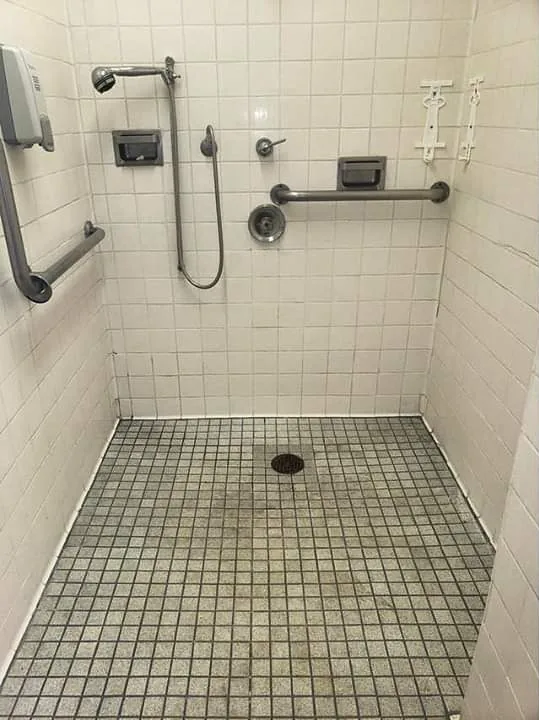
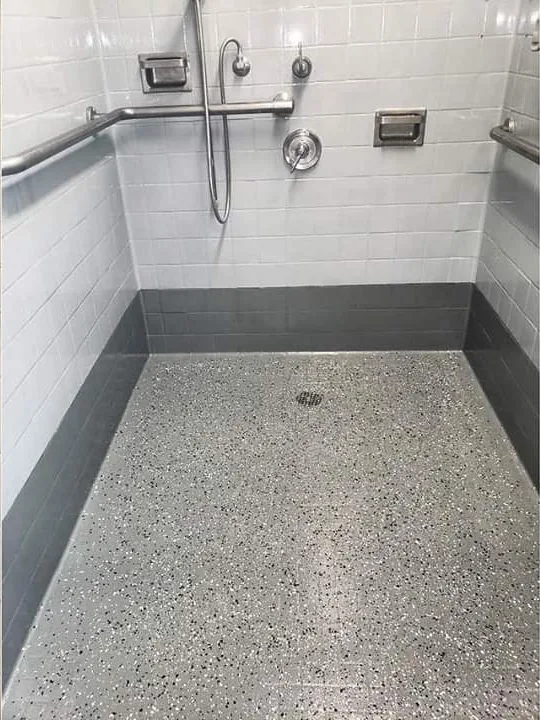
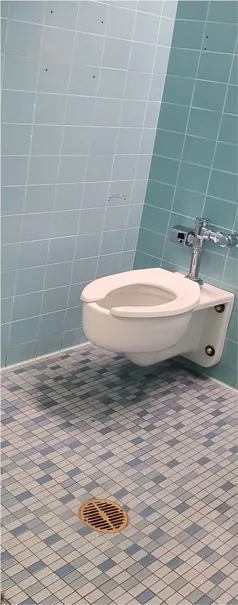
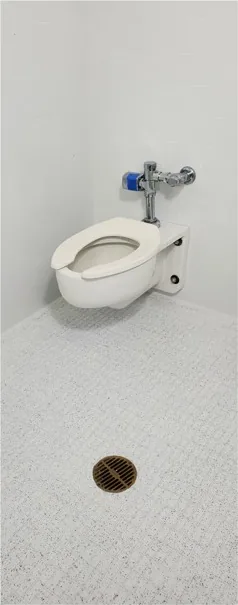
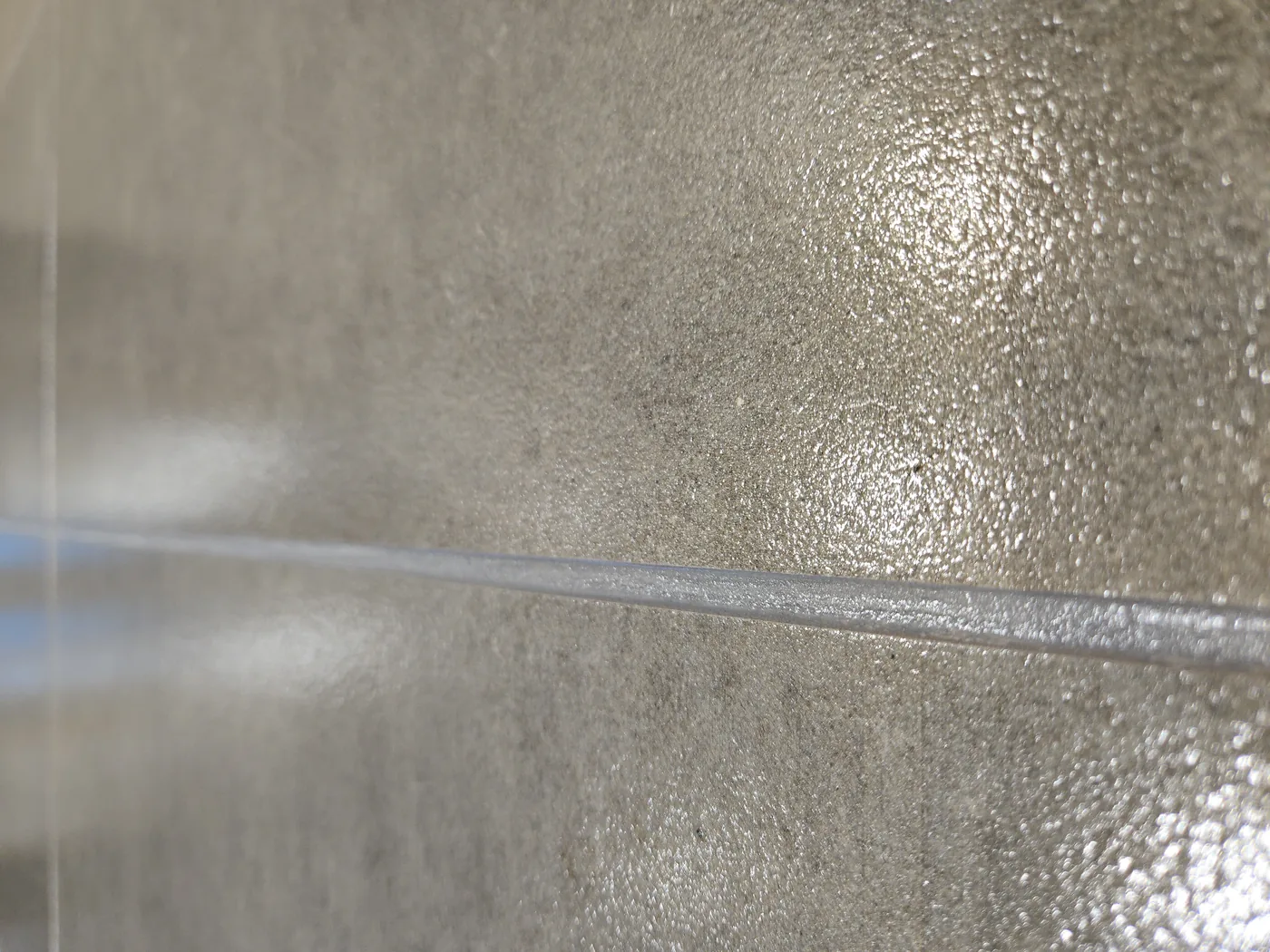
Before and after, side by side.
Each pair is the same floor, one photo before the crew got there and one after the shield cured. Nothing was replaced.
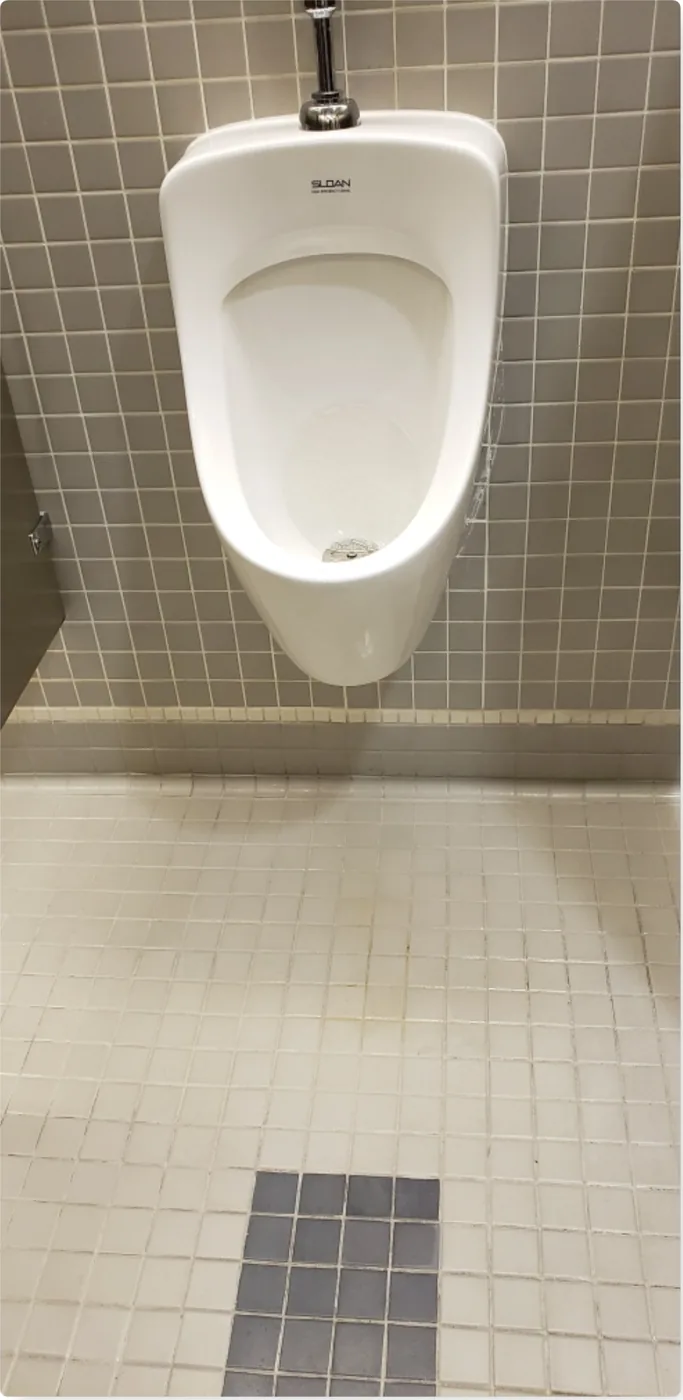
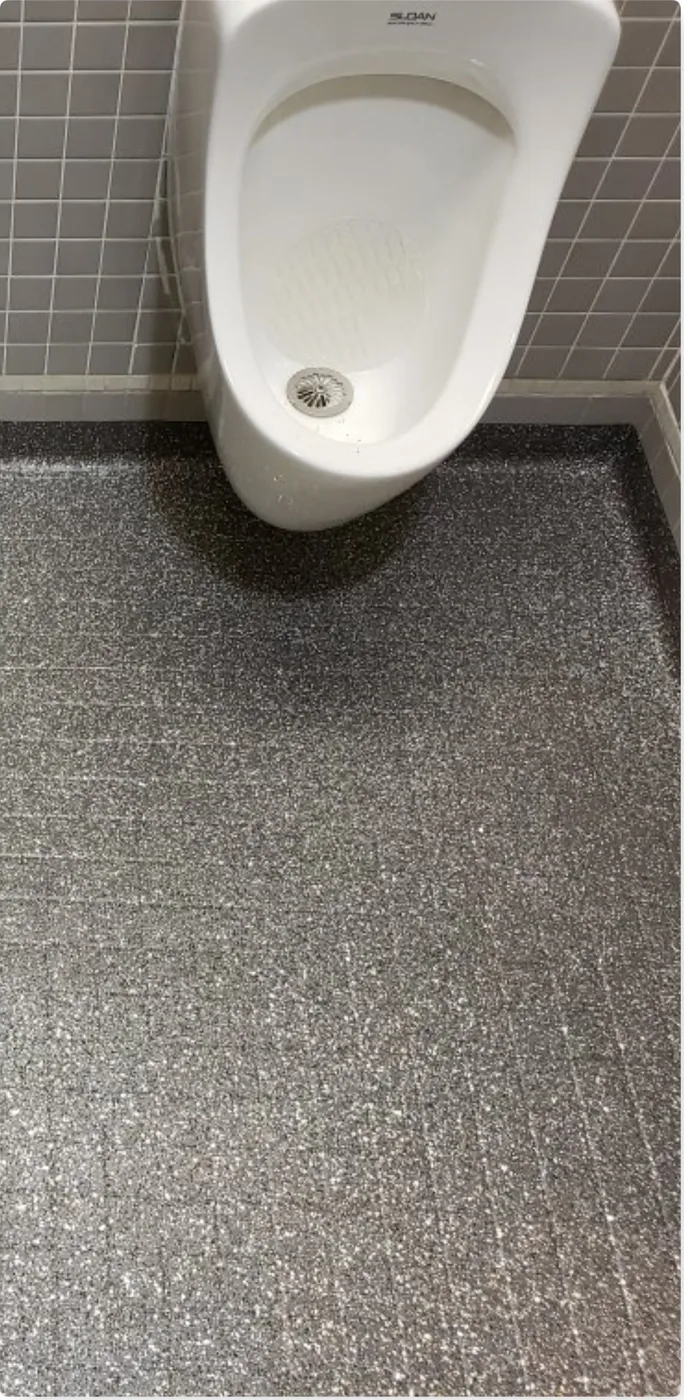
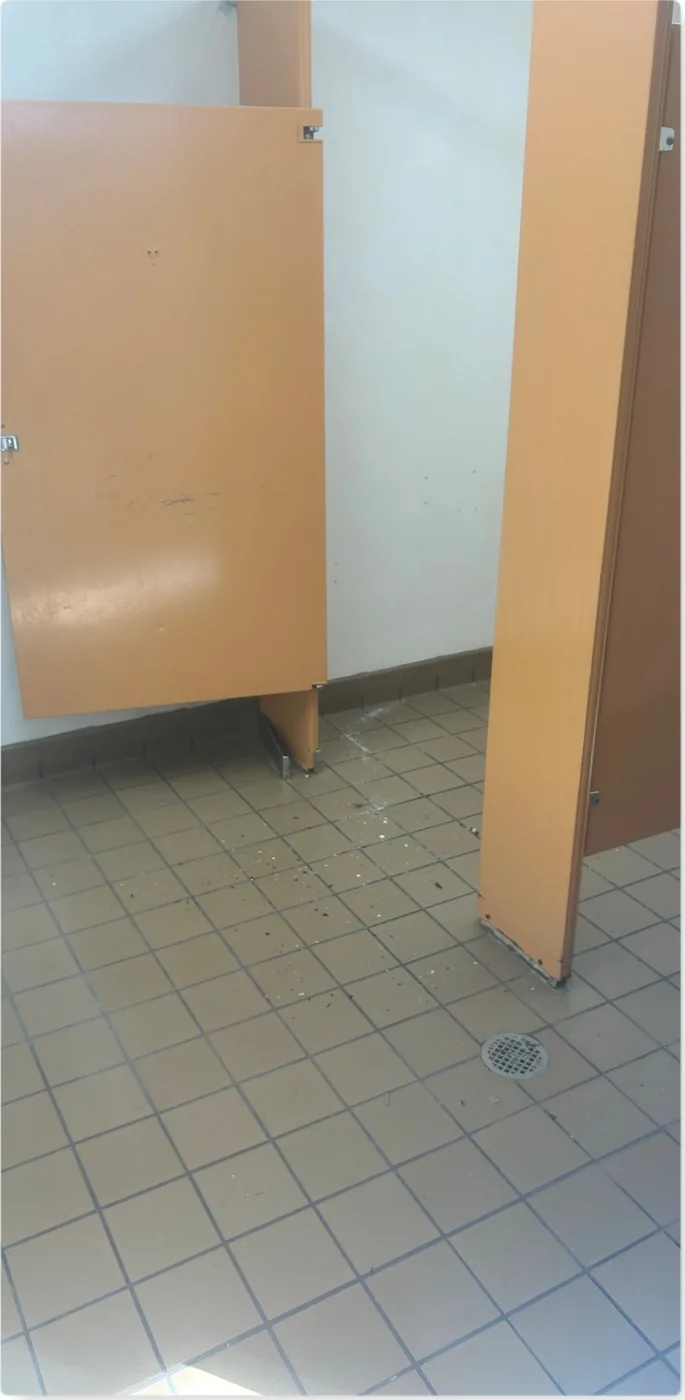
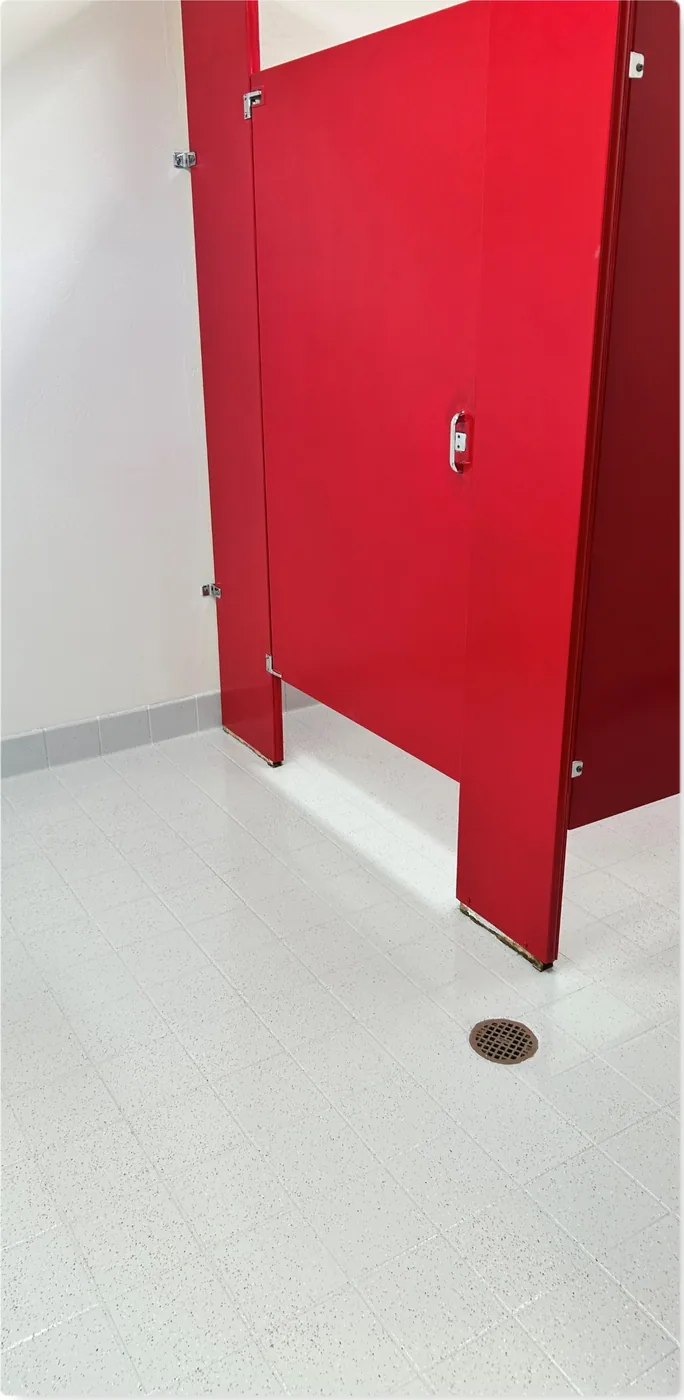
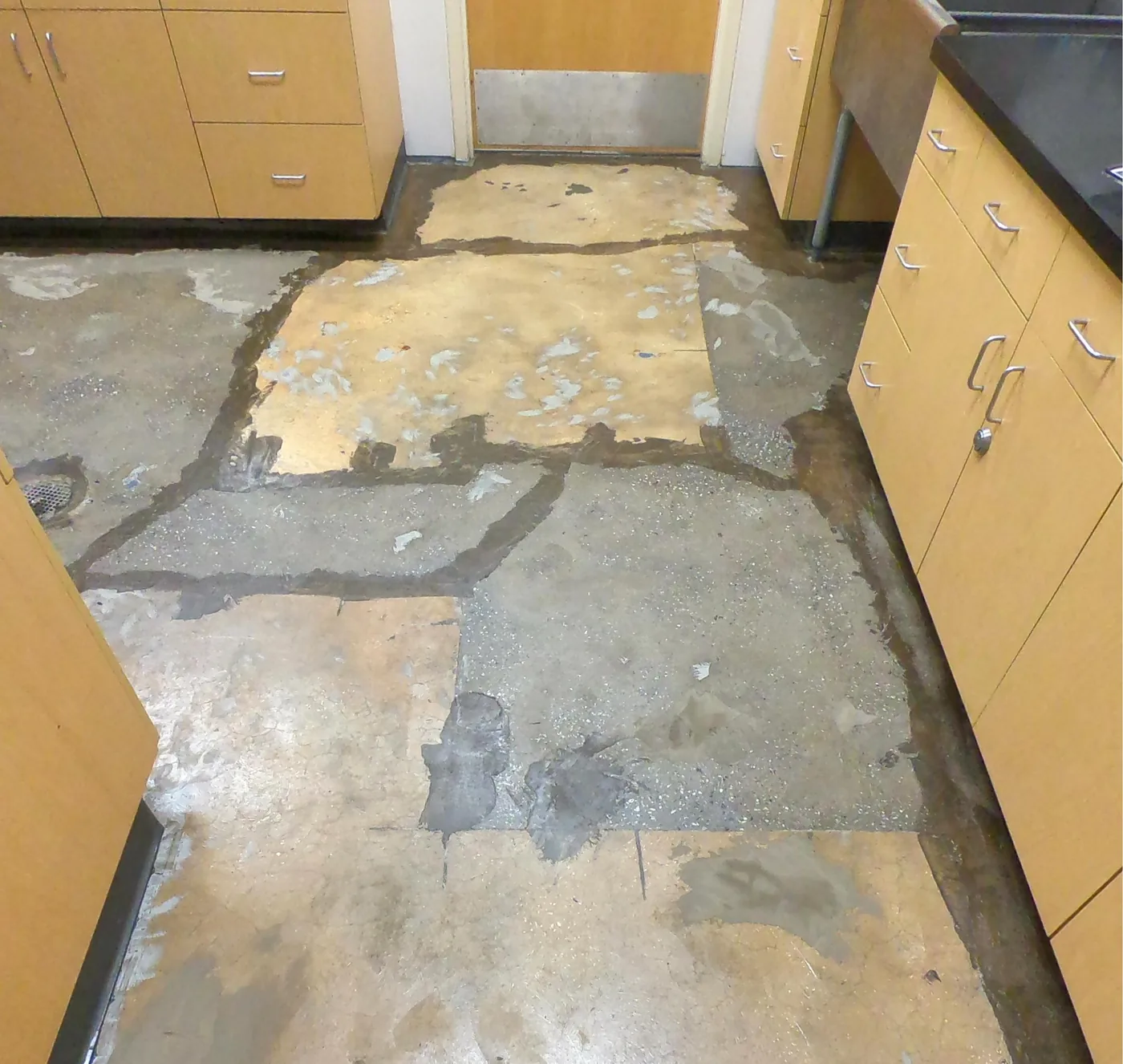
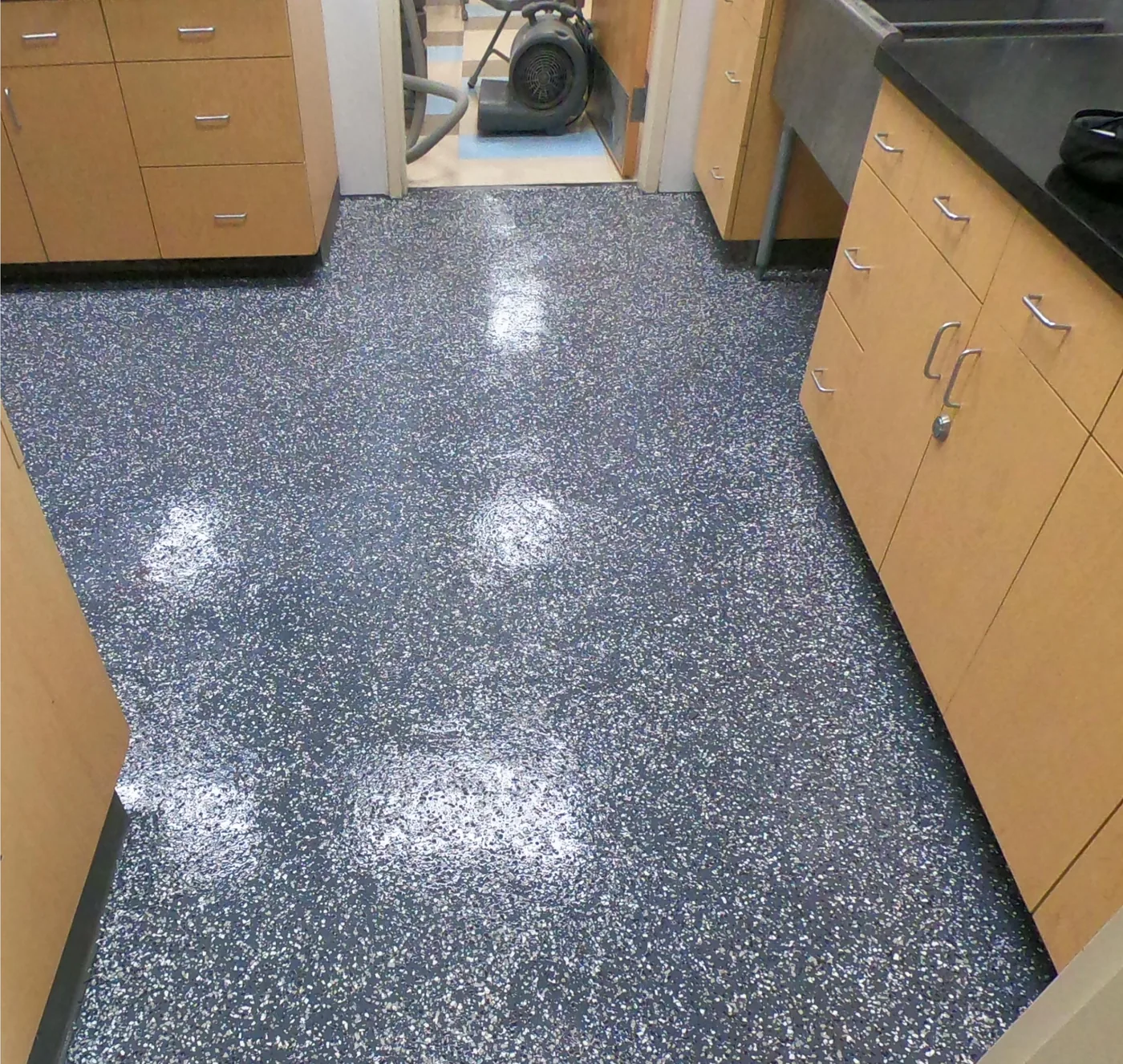
Built for the floors that get wet.
Shower pans, locker rooms, the floor under the urinals, the mop-sink corner. VariGLAZE is specified where the floor has to be sealed against water and still give traction when it is wet.
The flake layer gives the floor texture on its own. Textite, a compound of micro-particles, gets added to the coating at the particle size needed to reach the coefficient of friction the room requires.
Ask for the slip spec for your floor. Interior tile floors that get wet are measured by dynamic coefficient of friction (DCOF). The ANSI A326.3 threshold for those areas is 0.42. Tell us the target in your facility standard and we will match the Textite grade to it.
A flake finish forgives what a solid color shows.
A solid-color floor shows every patch, every filled crack, every spot where two tile batches met. The SaniCHIPS layer breaks the surface up into a terrazzo-like pattern, so repairs disappear into it and daily scuffs don't read.
It is the process to pick when the floor is sound enough to keep but too tired to show.
Four steps, one crew, no demolition.
Taken from the SaniGLAZE VariGLAZE process sheet.
-
Clean and prep the entire surface
The XcelKLEEN process pulls embedded contaminants out of the tile and grout and gets both ready so the coatings can bond. Any damaged areas get repaired at this stage.
XcelKLEEN -
Install the pigmented shield
SaniMAX-C is an extremely durable pigmented coating based on the Xolite polymer. It goes over the entire surface in the base color you chose.
SaniMAX-C -
Apply the decorative chips
SaniCHIPS, accent flakes of water-based resin and inorganic minerals, get broadcast over the wet base in the color scheme that coordinates with the room.
SaniCHIPS -
Install the clear shield
SaniMAX, the clear Xolite coating, locks the chips in under a durable, easy-to-clean surface. Textite gets added when the floor needs a specified slip resistance.
SaniMAXTextite
Where to specify VariGLAZE
- Any tile size, and floors with mixed tile or old patches.
- Wet floors: showers, locker rooms, pool decks, urinal areas, kitchens and mop-sink rooms.
- Floors that need a color change and a finish that hides wear.
- Rooms that need an extremely durable coating and a specified slip resistance.
Want to keep the tile color and only fix the grout? That is EnduraGLAZE. A solid color on tile, counters or partitions is ChromaGLAZE+.
What it does
- Restores the surface to a brand-new appearance
- Prevents soil and moisture penetration
- Eradicates foul odors
- Repels bacteria, mildew and mold
- Simplifies maintenance for the custodial team
- Eliminates the expense of replacement
VariGLAZE process sheetThe SaniGLAZE specification page, as a PDF for your file.
Download the PDFThe other two processes
EnduraGLAZE
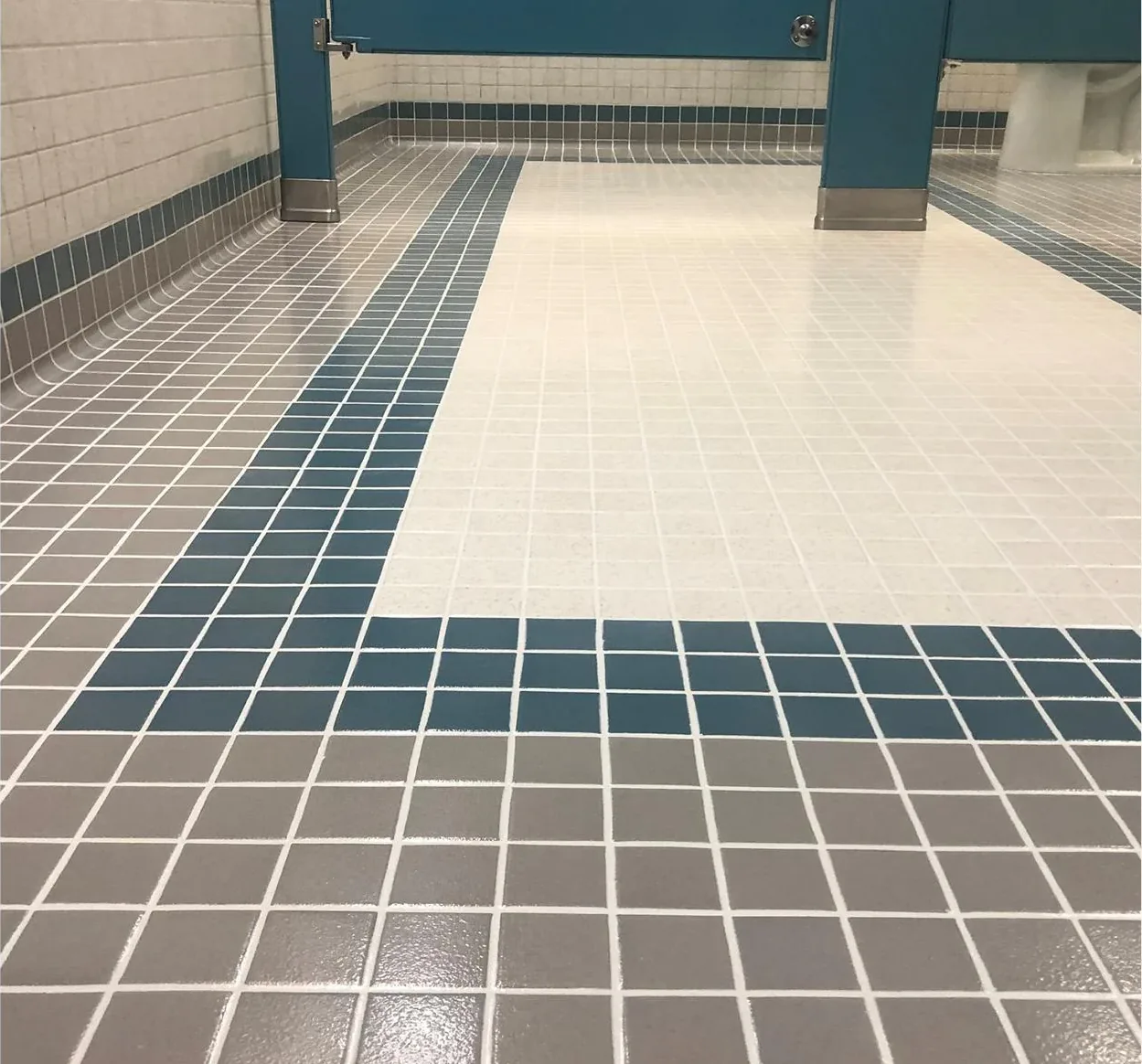
Keeps the tile you have. Grout lines get rebuilt in a chosen color and the whole surface gets sealed. Works on 1x1 to 4x4 tile.
Keep your tile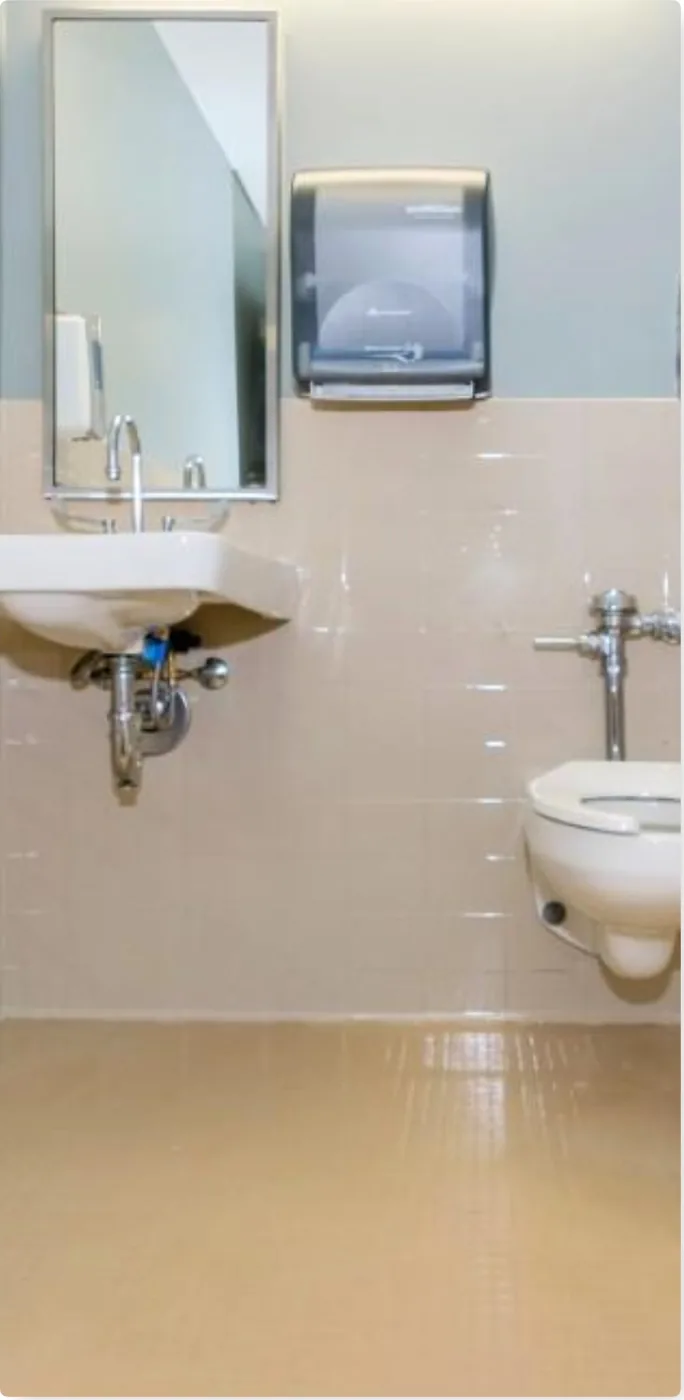
ChromaGLAZE+
A pigmented coat changes the color of tile and grout together. Floors, walls, counters, sinks and partitions.
Change the color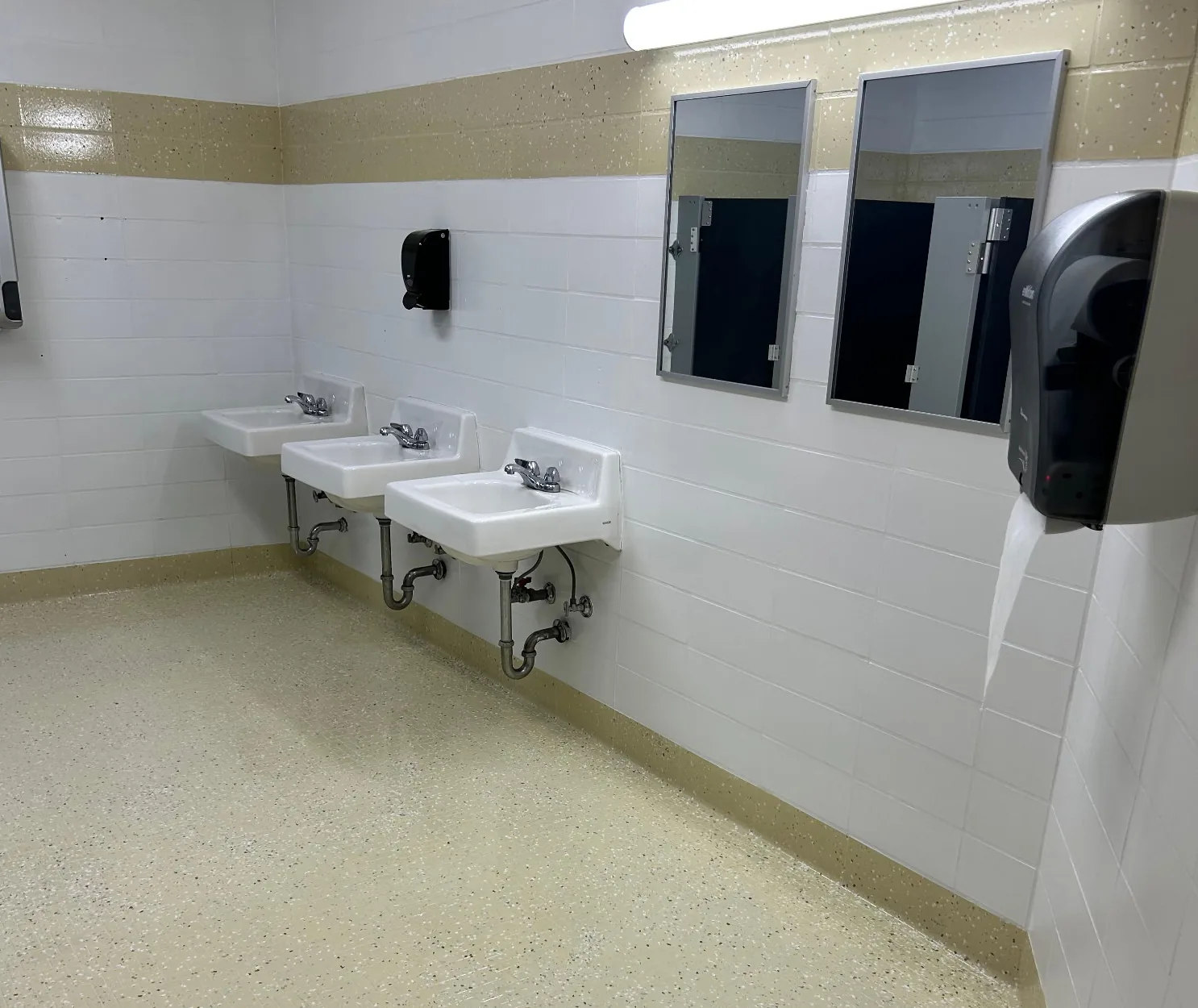
Which process is right?
Keep the color, change the color, or hide a worn floor. A two-minute guide, then an assessment to confirm it.
Decide in two minutesWhat facilities teams ask about VariGLAZE
- What is the difference between VariGLAZE and ChromaGLAZE+?
- VariGLAZE is ChromaGLAZE+ with a layer of SaniCHIPS accent flakes between the pigmented base and the clear topcoat. The flake finish hides wear and repairs that a solid color would show, and it adds texture.
- Is it slip resistant?
- The flake layer adds texture, and Textite micro-particles are added to the coating in the particle size needed to reach a specified coefficient of friction. Tell us the DCOF target in your facility standard.
- Can it go on a shower floor?
- Yes. Shower pans, locker room floors and the lower walls around them are common VariGLAZE jobs because the finish is seamless, sealed and textured.
- Does it cover patched or damaged floors?
- The flake pattern hides patches, color differences and old repairs that a single color would reveal. Damaged areas get repaired during prep, then coated with the rest of the floor.
- What colors are available?
- The base coat comes in a range of colors and the SaniCHIPS flakes in several color schemes, so the floor can be coordinated with the room.
Jobs VariGLAZE is used for
- Anti-slip floor coatingA sealed tile floor with slip resistance built into the topcoat.
- Commercial shower refinishingLocker room, residence hall and hospital showers refinished in place.
- Commercial tile refinishingRestore the tile and grout you have instead of tearing it out.
- Commercial bathroom remodelingSort the rooms that need a remodel from the ones that don't.
Book a floor assessment.
We walk the rooms on your list, confirm VariGLAZE is the right process for the floor, and give you colors, a scope and a price. No obligation, anywhere in Utah.
- Walk-throughFloor condition, drains and slopes, wet areas, and what the slip spec needs to be.
- Colors and scopeBase color and chip scheme matched to the room, and which surfaces to include.
- Pricing and scheduleA price for the rooms on your list and a plan that fits weekends or breaks.
Rather talk it through? (801) 758-2323